
The BNP Paribas Open Schedule and Order of Play, Explained
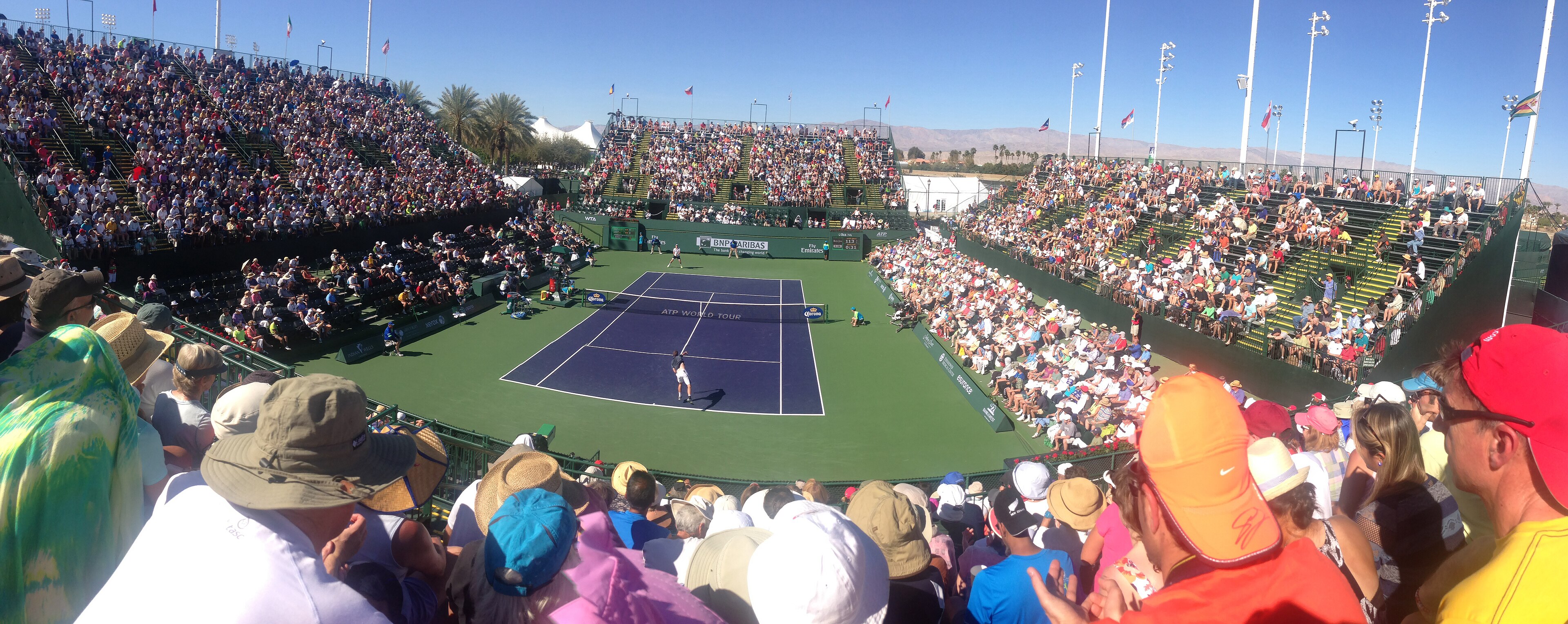
The most common question about the BNP Paribas Open is some version of “when is my player on?” The answer is that nobody knows until the evening before, including the tournament.
Here is how the schedule at the Indian Wells Tennis Garden actually works, why it moves, and which days give you the most tennis for your money.
The shape of the thing
The tournament runs fifteen days of competition: three days of qualifying, then twelve days of main draw. It lands in early-to-mid March most years and sometimes starts in late February.
Qualifying is the Sunday, Monday and Tuesday before the main draw opens. Women play alone on the Sunday; both tours play the Monday and Tuesday. The main draw then runs Wednesday through the second Sunday, and both singles finals are on that closing Sunday.
The part that matters for planning: this is a combined event. The men and the women play the same rounds on the same days at the same venue, which is why nine courts are in use at once in the first week and why the place feels enormous.
Day session and evening session are two different tickets
On main-draw days there are two ticketed sessions in Stadium 1.
- Day session – gates at 10 a.m., first matches at 11.
- Evening session – gates at 4:30 p.m., first matches typically at 6. One quarterfinal night usually starts an hour earlier.
- Qualifying days – one all-day session, gates at 9, matches at 10.
These are sold separately. There is a combined “Daily Double” product if you want both, which is the clearest confirmation that one does not include the other.
The last Saturday and the final Sunday are day sessions only.
One thing the tournament does not publish anywhere: whether a day-session ticket lets you stay on the outer courts once the evening session starts. Plenty of third-party guides assert an answer in both directions. None of them cite a source. Ask at a Guest Services kiosk on the day rather than trusting a blog.
The order of play
This is the actual answer to the question.
The schedule for each day is set late in the afternoon or evening before that day, by the tournament referee together with the WTA and ATP supervisors, the broadcasters and the tournament director. It then goes up on the tournament website and its social channels that evening.
So if you are trying to plan Thursday around one player, you will not know until Wednesday night. That is not the tournament being cagey. Matches have to finish before the next round can be scheduled, and television has a say.
Two pieces of notation to read properly:
- “Starting at 11:00 AM” means that match starts the session on that court.
- “Not before 2:00 PM” means exactly that and nothing more. It is a floor, not a start time. If the match before it goes three long sets, your 2 p.m. becomes 4 p.m.
The published order of play also carries a line stating that matches may be moved at the supervisor’s discretion. Courts change. It happens.
How to actually track a player
The tournament app carries the daily schedule, live scoring, and — the useful part — player alerts. You pick your favourites and it tells you when they are on. It also holds your ticket and your parking pass, since everything is digital through AXS.
If you would rather not install anything, the order of play page on the tournament site does the same job a few taps slower.
Nine match courts, twenty practice courts
The Tennis Garden has 29 courts in total. Nine of them host matches — Stadium 1 down to Stadium 9 — and the other twenty are practice courts on the south side of Stadium 1.
Matches on the outer courts are not ticketed separately. Every ticket type includes non-reserved seating in Stadiums 3 through 9, which is where most of the tennis actually happens in the first week.
Practices are open to anyone with any ticket, and the daily practice schedule goes up on the tournament website each morning. It is also displayed on information towers next to the practice courts. For a lot of people this is the best-value hour of the day: you can stand a few feet from a player you would otherwise be watching through binoculars.
More: the full BNP Paribas Open guide · what the Tennis Garden is like
Which days give you the most tennis
The schedule answers this by itself, without anyone having to recommend anything.
The first two days of the main draw carry both first rounds, men’s and women’s, across every court. By the closing Sunday the entire day is two matches. The tournament groups its own ticketing into phases — qualifying, early rounds, middle weekend, second week, championship weekend — and the trade is obvious once you see it laid out: early for volume and access, late for stakes.
If the point is to watch a lot of tennis and stand close to players, go early. If the point is to see a final, go late and pay for it.
Two things worth knowing
- There is a free Family Day at the Tennis Garden on the Saturday before qualifying starts, with clinics and player appearances. No ticket required.
- Qualifying tickets are $10 for the whole day, and the money goes to the Champions Volunteer Foundation. Same grounds, same practice courts, a fraction of the people.
More guides
- The BNP Paribas Open guide
- Indian Wells Tennis Garden
- What to eat at the tournament
- March in Palm Springs
- Events and festivals in the Coachella Valley
Session times, prices and policies are set by the tournament and change from year to year. Everything here was checked against the tournament’s own site; confirm before you travel.
Related:





Written by : Casey Dolan
Casey is the founder of Cactus Hugs and also works with local businesses on their websites and digital marketing. Learn more (and hire!) him here. Please, send him your news tips and your whiskey!